Plaistow gardening emergency tree removal what to know
If a tree has split, leaned suddenly, dropped heavy limbs, or started brushing against a roof after a windy night, you do not have the luxury of overthinking it. Plaistow gardening emergency tree removal what to know is really about making the right call quickly, without creating more risk for your home, garden, neighbours, or yourself. A tree problem can look dramatic, or it can be quietly dangerous. Either way, the next steps matter.
In this guide, you will learn how emergency tree removal works in Plaistow, what signs mean you should act now, what a responsible contractor will do, and which mistakes tend to make a bad situation worse. We will also cover practical comparisons, compliance considerations, and a realistic checklist you can use before anyone turns up with saws and ropes. No fluff. Just the useful stuff.
Table of Contents
- Why Plaistow gardening emergency tree removal what to know Matters
- How Plaistow gardening emergency tree removal what to know Works
- Key Benefits and Practical Advantages
- Who This Is For and When It Makes Sense
- Step-by-Step Guidance
- Expert Tips for Better Results
- Common Mistakes to Avoid
- Tools, Resources and Recommendations
- Law, Compliance, Standards, or Best Practice
- Options, Methods, or Comparison Table
- Case Study or Real-World Example
- Practical Checklist
- Conclusion
- Frequently Asked Questions
Why Plaistow gardening emergency tree removal what to know Matters
Emergency tree removal is not just a gardening job with a louder truck. It is a risk-management job. When a tree is unstable, damaged, or partially failed, the priority is to reduce danger first and worry about tidying up later. That is especially true in a dense urban area like Plaistow, where gardens are often close together, access can be tight, and a falling branch has very little room to land harmlessly.
Truth be told, the scary part is often not the obvious wreckage. It is the half-broken limb still hanging overhead, the root plate lifting in the soil, or the trunk that looks fine until you notice it creaking in the wind. Those are the moments where a quick, calm response matters more than a clever DIY fix.
There is also the practical side. A failed tree can block paths, damage fences, interrupt access to sheds or outbuildings, and affect neighbouring property. In a shared or boundary situation, delays can turn a manageable problem into a tense one. Nobody wants to be that person trying to explain why a branch is now sitting on a shared fence panel at 8am on a Monday.
For many property owners, the real value of understanding emergency tree removal is confidence. You can spot danger sooner, communicate clearly with a contractor, and avoid paying for rushed work that was not actually necessary. If the issue is broader garden damage as well as the tree itself, it may also make sense to think about garden clearance or wider garden maintenance once the urgent danger has been dealt with.
How Plaistow gardening emergency tree removal what to know Works
Emergency tree removal usually starts with a rapid assessment. The contractor looks at what has happened, how unstable the tree is, what is at risk, and whether the safest answer is complete removal, partial dismantling, or immediate make-safe work followed by a second visit. In plain English: they decide how to stop the problem getting worse.
In most real situations, the first job is not "cut it all down." It is often to make the site safe. That might mean isolating the area, checking for tension in broken limbs, confirming whether the trunk is still moving, and identifying any hazards such as overhead cables, glass, conservatory roofs, or compromised fences. Sounds simple. It rarely is.
A proper emergency response usually follows a sequence like this:
- Initial call and hazard description. You explain what happened, where the tree is, and whether there is active danger.
- Rapid visual assessment. The tree is inspected for structural failure, leaning, hanging branches, root movement, or impact damage.
- Safety decision. The contractor decides whether the site can be worked on immediately or whether it needs to be isolated first.
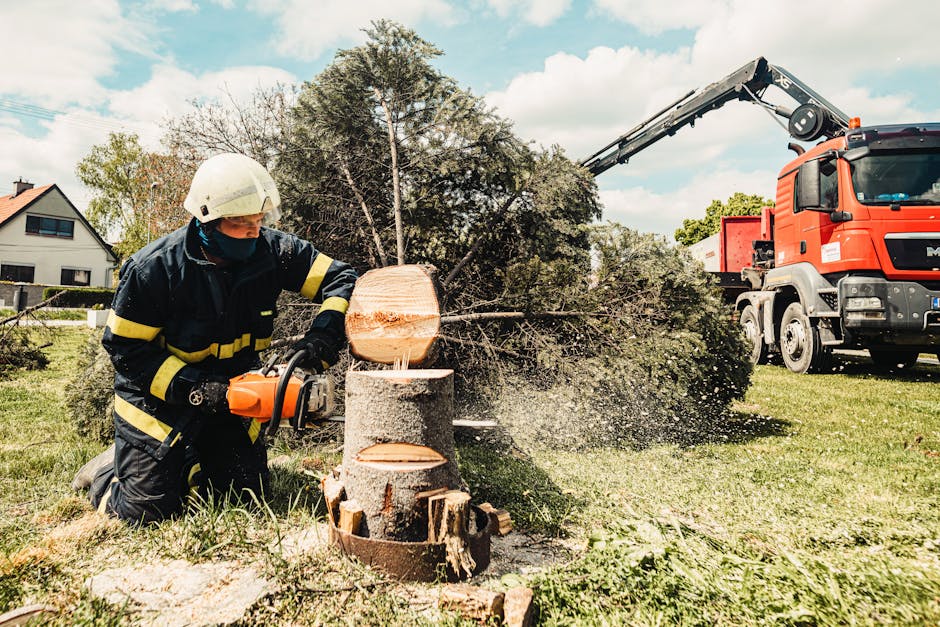
- Controlled dismantling or removal. Branches and sections are taken down carefully, usually in stages where access or risk is limited.
- Clearing and disposal. Timber, branches, and debris are removed, often alongside follow-up work to stabilise the garden.
In some cases, the tree can be made safe without a full removal on day one. That might happen where a major branch has failed, but the main stem remains structurally sound. In other cases, the safest option is straight removal. A good contractor should explain why they are recommending one approach over another, not just push for the biggest job.
One helpful thing to remember: emergency tree work is often more about judgment than brute force. Anyone can make a mess with a chainsaw. The skill is in removing risk without creating a bigger one.
Key Benefits and Practical Advantages
When emergency tree removal is handled properly, the benefits go beyond getting rid of a dangerous tree. You regain control of the space, reduce the chance of secondary damage, and make the garden usable again. That matters a lot if the tree has blocked access, dropped limbs across a driveway, or started leaning into a neighbour's boundary.
- Immediate safety improvement. The biggest win is obvious: less chance of injury or further collapse.
- Reduced property damage. Fast action can limit harm to roofs, sheds, fences, paving, and nearby planting.
- Better access. You can get back into the garden, around the side return, or to outbuildings without ducking under branches.
- Cleaner decision-making. Once the urgent hazard is removed, you can properly assess what should replace the tree, if anything.
- Less neighbour friction. Quick action helps when a boundary tree is involved and everyone is staring at the same problem.
There is also a quieter benefit that people sometimes overlook: peace of mind. After a storm, the garden can feel a bit ominous. Every gust of wind seems louder, and every branch overhead looks like trouble. Getting the issue sorted properly has a surprisingly calming effect. You notice the difference that evening, usually when the wind drops and the garden finally feels like your own again.
If the removal is part of a wider garden reset, you may also want to look at landscaping or landscape gardening afterwards so the space is restored in a sensible, lasting way rather than patched up twice.
Who This Is For and When It Makes Sense
This kind of service is for anyone facing an urgent tree hazard, but the exact trigger can vary. A homeowner in Plaistow may need it after a storm, while a landlord might need it because a tenant has reported a cracked limb over a parking area. A managing agent may need fast action because the tree is affecting a communal path. Different setting, same basic problem: a tree that is no longer safe to leave alone.
It usually makes sense to call for emergency tree removal if you notice any of the following:
- a tree leaning more than it used to
- split or hanging branches after high winds
- lifting roots or cracked soil around the base
- branch failure touching a roof, greenhouse, or conservatory
- visible trunk cracks or sudden movement in the stem
- a tree fallen partially across a boundary or access route
- noisy creaking, rubbing, or snapping sounds in strong wind
Not every tree with a problem needs urgent removal, to be fair. Sometimes pruning, reduction, or monitoring is the right answer. But if you are asking yourself, "Is this safe to wait until next week?" that is already a clue worth listening to. Your instincts are often better than you think.
People often reach this point after a weekend storm or a sudden weather change. One moment the garden looks fine, the next morning there is a branch on the lawn, the bird feeder is tangled in twigs, and the whole thing has that damp woody smell that tells you something has definitely gone wrong.
Step-by-Step Guidance
If you are dealing with an urgent tree issue, follow a calm sequence. That keeps you safe and helps the contractor work faster when they arrive.
- Keep clear of the danger zone. Do not stand under damaged limbs or try to "just move" a cracked branch. A branch can fail without warning.
- Check for immediate threats. Look for contact with wires, blocked exits, broken glass, or damage to roofs and fences.
- Take quick photos from a safe distance. This helps with explaining the issue and may help later if you need to discuss the damage with a neighbour or insurer.
- Describe the situation clearly. Say what happened, when it happened, whether the tree is moving, and whether anything is trapped or blocked.
- Ask what the first visit includes. In an emergency, clarify whether the visit is for make-safe work, full removal, or assessment only.
- Confirm access. Narrow side passages, locked gates, and parked vehicles can slow everything down. Move what you can, if it is safe to do so.
- Prepare the area. Keep children, pets, and neighbours away from the work zone. It sounds obvious, but emergencies get messy quickly.
- Discuss waste removal and follow-up. Ask whether debris will be removed, stacked, chipped, or left for later collection.
If the tree is one part of a larger garden cleanup, it can be sensible to coordinate the job with garden clearance so you are not left with a second round of mess after the urgent work is done.
A small but useful point: if the tree is close to a structure or boundary, ask the contractor how they intend to control the fall of each section. In tight spaces, the difference between a careful dismantle and a rushed cut is enormous.
Expert Tips for Better Results
Here is where experience really matters. Emergency tree work rewards calm thinking, not panic. A few simple choices can make the whole process smoother, safer, and less expensive in the long run.
- Start with safety, not aesthetics. A tree can look ugly and still be stable. Another tree can look "mostly fine" and still be on the edge of failure. Focus on structure and movement.
- Be honest about what happened. If the tree was already leaning, mention it. If the problem began after a car impact or excavation, say so. Small details matter.
- Ask for the safest option, not the fastest-sounding one. Speed is useful, but controlled work is what you actually want.
- Check for future access issues. A crew may need room for ladders, lowering ropes, a chipper, or timber handling. A tiny path can change the method completely.
- Think about what happens after removal. Stump grinding, replanting, soil repair, or boundary tidying may be needed once the immediate danger is gone.
One practical observation: if the tree is large and near a structure, good communication matters almost as much as tools. The best crews explain the plan plainly. You should understand what they are doing and why. If you do not, ask. No shame in that at all.
For general garden upkeep after an emergency, regular hedge trimming, lawn mowing, and garden maintenance can help prevent the space from drifting into another problem later on.
Common Mistakes to Avoid
The mistakes people make in a tree emergency are usually understandable, but they can still be costly. A little restraint goes a long way here.
- Do not climb or cut a damaged tree yourself. Storm-damaged timber can be under tension. It can snap, twist, or spring unexpectedly.
- Do not ignore a leaning tree because it "has always been like that." If the lean has changed, or the root plate is disturbed, that is different.
- Do not assume one broken branch means the rest is safe. Sometimes the visible damage is just the obvious part.
- Do not park under or near a compromised tree. This includes guests' cars and delivery vehicles too.
- Do not let the job be rushed without a plan. Quick is fine. Careless is not.
Another common issue is waiting for a convenient day rather than dealing with the real hazard. Let's face it, nobody enjoys emergency calls or unexpected costs. But a delay can increase the amount of work needed, especially after more wind or rain.
And please, if the area is already unstable, do not stand there holding a branch while someone else "has a look." That is how people end up in stories they never wanted to tell.
Tools, Resources and Recommendations
You do not need to buy specialist equipment to handle an emergency tree problem, but it helps to know what a proper contractor may use and why. The right tools are selected for control, not drama.
| Tool or resource | Why it matters | What to look for |
|---|---|---|
| Chainsaw and pruning saws | Used for controlled cutting and sectioning | Clean, deliberate cuts rather than quick hacking |
| Ropes, lowering gear, and rigging | Helps lower heavy sections safely in tight spaces | Good control around roofs, fences, and paths |
| Protective equipment | Reduces risk during dismantling | Hard hats, eye protection, gloves, boots, and appropriate clothing |
| Traffic cones or barriers | Marks off a danger area | Used where the public or neighbours could wander in |
| Waste removal plan | Keeps the site tidy after the emergency work | Clear agreement on timber, branches, and green waste |
If you are choosing a contractor, it is reasonable to ask about insurance, method, and site safety. A professional team should be able to talk clearly about their process. You can also review pages such as insurance and safety and health and safety policy to understand the broader standards they work to.
For people trying to budget, the sensible next step is often to request a proper assessment and compare it with the scope of work. If you are weighing up urgent tree work against other garden jobs, the page on pricing and quotes can help you understand how estimates are usually approached. And if the whole garden needs attention after the removal, services overview gives a better sense of the wider support available.
Law, Compliance, Standards, or Best Practice
Tree work in the UK sits under a mix of property responsibility, safety duty, and local practicalities. Exact legal obligations can depend on ownership, tenancy, boundary position, conservation status, and whether the tree is protected. Because of that, it is sensible to treat any emergency tree issue carefully rather than making assumptions.
In practical terms, best practice usually means this:
- make the area safe first
- avoid unnecessary disturbance to neighbouring land
- confirm ownership or responsibility where relevant
- check whether the tree might be subject to local controls before non-urgent follow-up work
- use competent, insured people for higher-risk removal work
If a tree is near utilities, boundaries, or shared access, more care is needed. A contractor should not guess. They should inspect, explain, and proceed cautiously. That is simply good practice. If something feels borderline, it probably is.
Best practice also extends to waste handling and garden recovery. Responsible removal is not just about cutting timber down; it is about leaving the site safe, manageable, and as clean as the situation allows. If sustainability matters to you, the company's recycling and sustainability approach may be worth a look too.
Options, Methods, or Comparison Table
Not every tree problem calls for the same fix. Sometimes the right answer is a full emergency removal. Sometimes it is partial dismantling. Sometimes it is a make-safe visit first, with a second visit later. Here is a simple comparison.
| Method | Best for | Pros | Trade-offs |
|---|---|---|---|
| Full emergency removal | Severely split, uprooted, or unstable trees | Removes the hazard completely | Can be more disruptive and may need more time |
| Partial dismantling | Trees with one failing section but a recoverable main structure | Targets the dangerous part only | May still require follow-up work later |
| Make-safe visit | Immediate danger where full work cannot be done safely right away | Reduces risk quickly | Not the final solution; follow-up is usually needed |
| Monitoring and non-urgent pruning | Minor defects without active hazard | Less disruptive, often cheaper | Only suitable when the tree is genuinely stable |
The best option depends on the actual condition of the tree, not just the size of the damage. A small tree can be more dangerous than a big one if its root system has failed. Funny how that works, really. The eye is not always the best judge from ground level.
Case Study or Real-World Example
Here is a realistic example based on the kind of situation that comes up after a strong spell of wind. A homeowner in Plaistow notices that a medium-sized tree in the back garden has dropped a large limb overnight. The main stem is still standing, but the crown has shifted, the base looks cracked, and a section of branch is resting against a fence close to the neighbour's shed.
At first glance, the owner thinks the whole tree needs cutting down immediately. After a proper inspection, though, the safest first step is make-safe work: isolate the area, remove the failed limb in controlled sections, and reduce the strain on the remaining tree. Once the emergency is handled, the contractor advises a follow-up assessment to decide whether the tree can remain or whether full removal is the more sensible longer-term choice.
The useful lesson here is simple. Emergency work is not always the same as final work. A proper first response buys you time and safety, which is exactly what you need when the wind is still moving through the branches and the garden feels a bit on edge.
If the failed tree has also left behind a tangle of broken shrubs, torn turf, and blocked access, a broader tidy-up may be needed afterwards. That is where services like garden clearance and even landscaping become useful as a second stage, not as a distraction from the urgent issue.
Practical Checklist
Use this checklist if you are facing an urgent tree issue and want to stay calm and organised.
- Stay away from hanging branches, cracked stems, and lifted roots
- Keep children, pets, and visitors out of the area
- Look for roof, fence, or pathway damage from a safe distance
- Take a few photos without approaching the hazard
- Note whether the tree has shifted since the last time you saw it
- Prepare access gates, paths, and parking if it is safe to do so
- Ask whether the job is make-safe, partial removal, or full removal
- Confirm debris removal and any follow-up tidy-up
- Check whether neighbours need to be informed before work begins
- Arrange any wider garden repair once the tree is dealt with
Expert summary: In an emergency, the right decision is usually the one that reduces risk fastest without guessing. Keep clear, gather the facts, and let a competent team make the technical call. That simple habit prevents a lot of avoidable damage.
Get a free quote today and see how much you can save.
Conclusion
Emergency tree removal is one of those garden problems that rewards quick thinking and steady hands. The main thing to know is that visible damage is only part of the picture. Root movement, hidden splitting, hanging limbs, and nearby structures all affect the best response. In Plaistow, where access can be tight and properties often sit close together, getting the first move right really matters.
If you remember nothing else, remember this: safety first, assessment second, tidy-up third. That sequence keeps people protected and gives you the best chance of a clean outcome rather than a rushed patch-up. And if the job turns into a wider garden reset afterwards, that is fine too. One step at a time. Properly done, the whole space can feel calm again.
Sometimes the best thing you can do is pause, breathe, and deal with the problem in the right order. The garden will thank you for it.
Frequently Asked Questions
What counts as an emergency tree removal situation?
An emergency usually means the tree is actively unsafe: a stem has split, a large branch is hanging loose, roots are lifting, or the tree is blocking access or threatening property. If you are unsure, treat it cautiously.
Can I wait until tomorrow if the tree still looks mostly standing?
Sometimes, but not always. A tree can look stable and still fail in the next gust of wind. If there is visible cracking, leaning, or root movement, it is safer not to wait.
Should I cut a dangerous branch myself?
No. Damaged branches can be under tension and can snap without warning. Even a small mistake can turn a garden job into an injury or property damage issue.
Will emergency tree removal always mean the whole tree is taken down?
No. In some cases, only the failing section is removed and the tree is made safe. A full removal is recommended when the main structure cannot be trusted.
How do I know if the tree is affecting my neighbour's property?
If branches cross a boundary, touch a roof, or rest on a fence or shed, the situation affects more than your own garden. It is best to mention this clearly when you call for help.
What should I tell the contractor on the phone?
Explain what happened, how the tree looks now, whether it is leaning or moving, and what it might be touching. The clearer you are, the better the first assessment will be.
Do I need to clear the garden before the team arrives?
Only if it is safe. Move cars, bins, and obstacles if you can do so without going near the hazard. Do not risk personal injury just to tidy the space.
What happens to the wood and branches after removal?
That depends on the service agreed. Some teams remove everything, while others leave timber stacked or cut for further processing. Always confirm waste handling in advance.
Is emergency tree removal more expensive than standard removal?
It often can be, because the work is urgent and may need extra care, faster attendance, or more complex equipment. The exact cost depends on access, size, and risk.
Can a damaged tree be saved instead of removed?
Sometimes, yes. If the main structure and root system are still sound enough, pruning or reduction may be possible. The only reliable answer comes from a proper assessment.
What if the tree has already fallen but is still partly attached?
Stay clear and treat it as unstable. A partially fallen tree can shift suddenly, especially if tension remains in the trunk or branches.
Should I ask about insurance before booking?
Yes. For any higher-risk tree work, it is sensible to confirm that the contractor has appropriate insurance and follows safe working practices. That is basic due diligence, not fussiness.
What should I do after the tree is removed?
Once the danger is gone, inspect the area for broken fencing, damaged soil, exposed roots, and blocked access. Then decide whether you need clearance, repairs, or a new planting plan for the space.